INTERUNIVERSITARY Climate change and Risk Management in Mountain regions
 Aosta/Milano
 Master 2 Livello
 Inglese
 12 mesi
 blend-mista
Vision
Students should develop scientific and technical skills in climatology, hydrogeology, glaciology, ecology, and water resource management. In addition, they will acquire analytical and digital tools (GIS, remote sensing, and climate/environmental modeling) and risk assessment skills (vulnerability analysis, impact scenarios, and adaptation strategies). Transversal competencies are project management, interdisciplinary teamwork, scientific communication, and outreach. Eventually, they will gain knowledge of international and national climate policies.
The Master’s program is organized by the University of Milano-Bicocca in collaboration with the University of Aosta, where in-person classes will take place.

Mission
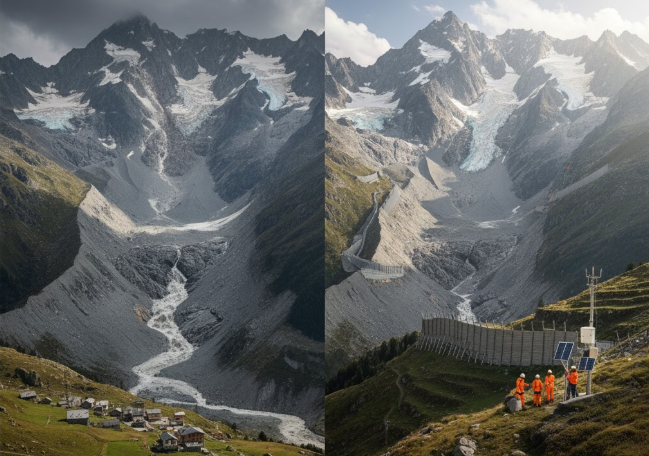
This Master program offers an understanding of climate-change related risks, with a focus on the drivers of climate change and their impacts on mountain regions. Students analyze processes and mechanisms of climate-related risks, including glacier retreat, biodiversity loss, hydrogeological hazards, and water resource changes. The master's teaching approach combines scientific methods, GIS tools, remote sensing, and modeling techniques to assess vulnerability, measure risks, and support decision-making. It also explores innovative solutions to enhance climate resilience, such as nature-based approaches, sustainable land management, and climate-adaptive infrastructure. In addition, the program addresses international and national climate policies, governance frameworks, and strategies for engaging communities and securing funding for climate adaptation. Learning is integrated with case studies and fieldwork, ensuring both theoretical knowledge and practical experience.
Organizzazione Didattica
 448 ore di Lessons
400 ore di Stage/Project Work
448 ore di Lessons
400 ore di Stage/Project Work
Esami e Frequenza
Insegnamenti
- Climate science and global climate change
- Specific impacts of climate change in mountain regions
- Climate models and future scenario
- Hydrogeological risks: landslides, avalanches, soil erosion
- Glacier retreat and changes in the cryosphere
- Water resources and impacts on water availability
- Biodiversity loss and ecosystem changes in mountain areas
- Wildfires and desertification
- Introduction to risk analysis
- Remote sensing and GIS for risk management
- Vulnerability and resilience indicators
- Cost-benefit analysis of mitigation and adaptation strategies
- Urban planning and land management in mountain areas Nature-based solutions for risk reduction
- Environmental engineering for sustainable solutions for risk mitigation
- Climate-resilient infrastructure and mobility
- International and national frameworks on climate change
- Risk management and adaptation policies in mountain areas
- Community engagement and participatory decision-making
- Funding mechanisms for climate adaptation
Impacts that micro-actors (e.g., small-medium enterprises but also large companies) must address through mitigation, entrepreneurial innovation, etc. to face Climate Change
Seminars by external experts on specific subjects (Infrastructures management, local/regional/national hazard and risk zonation, remote sensing, contamination and remediation, risk perception)
Scientific Committee
Braga

Pogliotti
Jaboyedoff


Quali competenze acquisisci?

INTERUNIVERSITARY Climate change and Risk Management in Mountain regions
A chi è rivolto ?
Graduates may find employment in international organizations and NGOs (e.g., UN agencies, UNEP, FAO, WWF) working on development cooperation and climate adaptation; public administration (local authorities, environmental agencies, civil protection) in climate risk management and territorial planning; research centers and universities as researchers or technical specialists in climatology, natural resource management, and hydrogeological risk; private companies and consultancy firms in environmental engineering, impact assessments, or insurance (climate risk evaluation).

News del Corso